
 Türkçe
Industrial equipment is often exposed to challenging environmental conditions such as dust, moisture, water, and temperature changes. These external factors can directly affect the performance, reliability, and safety of electrical and electronic devices used in industrial facilities. For this reason, equipment must be designed with a defined level of protection against environmental influences. IP protection classes are used internationally to indicate how resistant a device is to the ingress of solid objects such as dust and liquids like water.
IP protection ratings are especially important in environments where safety is critical, such as oil and gas facilities, chemical plants, and energy production sites. In these environments, electrical equipment must operate reliably even when exposed to dust particles, humidity, rain, or cleaning processes. If environmental elements enter the enclosure of a device, they can damage internal components and cause operational failures. In hazardous environments, such failures may also create additional safety risks. Therefore, IP ratings help engineers and facility managers evaluate whether equipment is suitable for the environmental conditions in which it will be used.
In explosion-proof (ex-proof) applications, environmental protection becomes even more significant. Equipment operating in explosive atmospheres must maintain both mechanical durability and operational safety under demanding conditions. IP protection ratings provide an important reference when selecting equipment for these environments. By understanding the meaning of IP protection classes, organizations can choose devices that ensure reliability, reduce maintenance requirements, and maintain operational continuity. This makes IP protection an essential factor in modern industrial safety and equipment selection.
What Are IP Protection Classes?
IP protection classes are internationally recognized standards used to define how well electrical and electronic equipment is protected against external elements such as dust, solid particles, and water. The IP rating system, which stands for “Ingress Protection,” provides a clear classification that indicates the level of resistance a device offers against environmental influences. In industrial environments where equipment operates under demanding conditions, selecting devices with appropriate IP protection classes is essential for ensuring reliability and safety. These classifications allow engineers and technical teams to quickly understand whether a device can withstand exposure to dust, moisture, or water without suffering damage or operational failure.
The IP rating is typically expressed with the letters “IP” followed by two numerical digits. Each digit represents a different type of protection. The first digit indicates the degree of protection against solid objects such as tools, hands, or dust particles, while the second digit represents protection against water ingress. By analyzing these two values together, engineers can determine how suitable a piece of equipment is for a specific environment. For example, devices used in outdoor installations or dusty industrial facilities often require higher IP ratings to maintain performance and durability. Understanding IP protection classes helps organizations reduce equipment failure, extend operational lifespan, and maintain consistent production processes.
How Is the IP Code Read?
The IP code is a standardized system used to indicate the level of protection that electrical or electronic equipment provides against external elements. It is written with the letters “IP” followed by two numerical digits. These numbers represent different types of protection and allow engineers to quickly understand how resistant a device is to environmental factors. The first digit refers to protection against solid objects such as tools, wires, or dust particles, while the second digit indicates the level of protection against water. By reading these two digits together, professionals can determine whether equipment is suitable for a specific industrial environment. This coding system makes it easier to compare products from different manufacturers using the same international standard. It also simplifies equipment selection for engineers working in industries with strict environmental and safety requirements. As a result, the IP code has become one of the most widely used classification systems in industrial equipment design.
Understanding how to read the IP code is particularly important when selecting equipment for harsh or hazardous environments. For instance, devices used in dusty production areas must have a high level of protection against solid particles. Similarly, equipment installed outdoors or in areas exposed to water spray must have sufficient protection against moisture and liquids. When these values are clearly understood, engineers can make more accurate decisions during the equipment selection process. Misinterpreting the IP code may result in the use of devices that are not suitable for the working environment. This can lead to equipment failure, increased maintenance costs, and operational interruptions. Therefore, correctly reading and interpreting the IP code helps ensure that industrial systems operate safely, efficiently, and reliably.
What Do Dust and Water Protection Levels Indicate?
Dust and water protection levels in IP ratings describe how effectively an equipment enclosure prevents solid particles and liquids from entering the device. These levels are represented by the two digits that follow the “IP” designation. The first digit indicates the level of protection against solid objects such as tools, wires, and dust particles. The second digit represents the resistance of the device against water exposure. Together, these values provide a clear understanding of how well equipment can withstand environmental conditions. In industrial facilities where dust, humidity, and liquids are common, these protection levels play a major role in ensuring equipment reliability. A higher number generally indicates stronger protection against external elements. For example, equipment with a higher dust protection level prevents small particles from entering the enclosure and damaging internal components. This helps maintain stable device performance and reduces the likelihood of mechanical or electrical failure.
Water protection levels are equally important in environments where equipment may be exposed to moisture, splashing water, or cleaning processes. Lower protection levels typically cover basic exposure such as dripping water, while higher levels indicate resistance to water jets or even temporary immersion. This classification allows engineers to select equipment that can safely operate under specific environmental conditions. In outdoor installations, for instance, devices must be able to withstand rain and humidity without compromising functionality. Similarly, industrial environments that require frequent washing processes demand equipment with stronger water protection levels. By understanding what dust and water protection levels indicate, organizations can select equipment that ensures operational stability and minimizes maintenance issues. Properly rated devices are less vulnerable to environmental damage and contribute to safer and more efficient industrial operations.
How Are IP Protection Classes Determined?
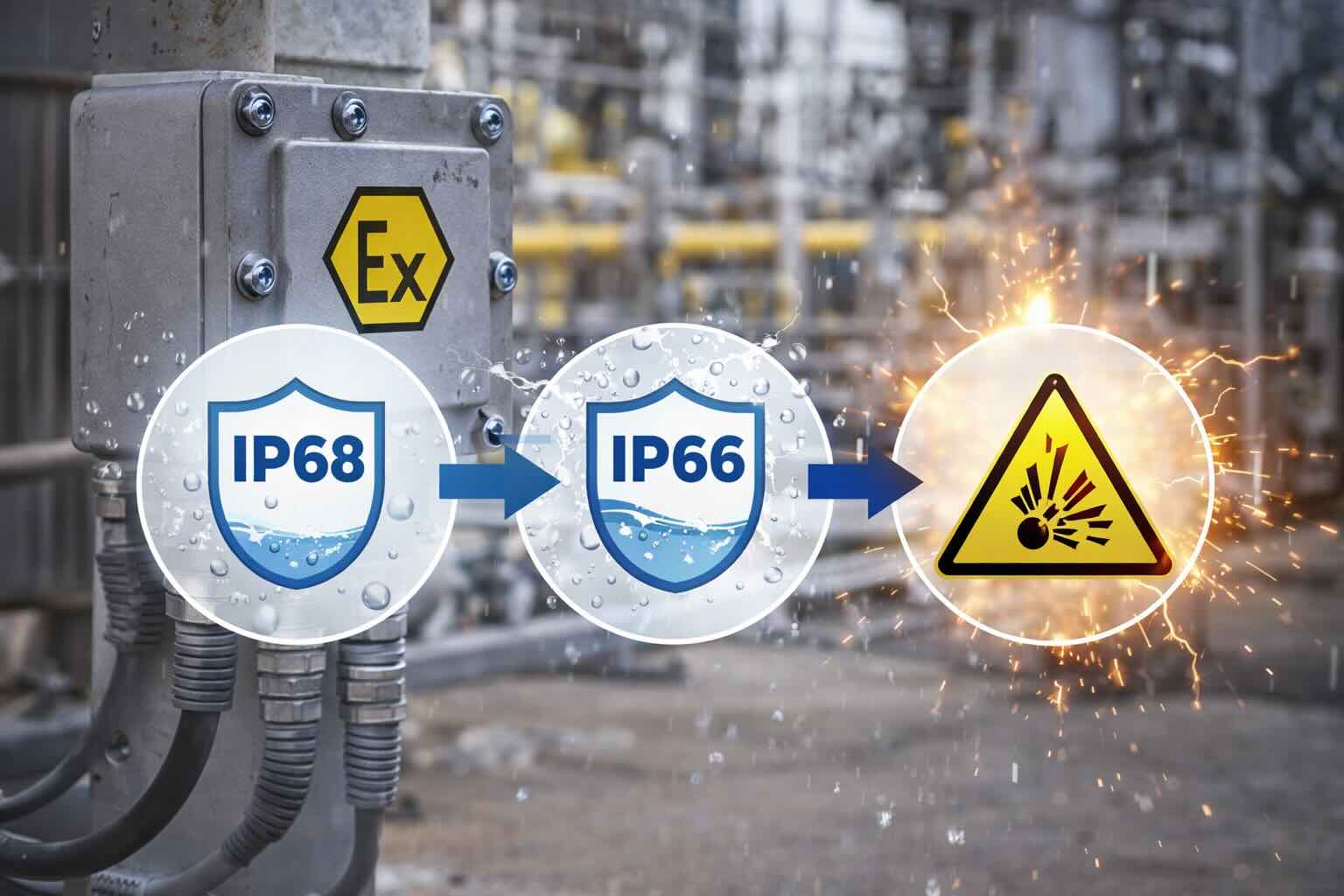 IP protection classes are determined through standardized testing procedures defined by international standards such as IEC 60529. These tests evaluate how effectively an equipment enclosure prevents the entry of solid objects and liquids under controlled laboratory conditions. During the testing process, devices are exposed to different environmental factors including dust particles, water droplets, pressurized water jets, or temporary immersion. The purpose of these tests is to measure the ability of the equipment to maintain safe and stable operation when exposed to these external elements. Based on the results, the equipment is assigned a specific IP rating that indicates its level of protection. For manufacturers, determining the correct IP protection classes is an essential part of product design and quality assurance. It ensures that equipment can perform reliably in the environments for which it is intended.
The determination of an IP rating also depends heavily on the design of the equipment enclosure and the materials used. Components such as seals, gaskets, cable glands, and enclosure structures are carefully engineered to prevent the penetration of dust and water. During testing, these components are evaluated to ensure they maintain their protective function under different environmental conditions. For example, dust protection tests may involve placing equipment in chambers filled with fine particles, while water protection tests may include spraying water at specific pressures or immersing the device in water for a defined period. These controlled procedures allow manufacturers and certification bodies to verify the durability of the enclosure design. As a result, IP protection classes provide a reliable reference for engineers and facility managers when selecting equipment suitable for specific industrial environments.
What Do the First and Second Digits Mean?
In an IP protection rating, the two digits that follow the letters “IP” represent different types of protection provided by the equipment enclosure. The first digit indicates the level of protection against solid objects and dust. This protection ranges from preventing accidental contact with large body parts such as hands to providing complete protection against fine dust particles. The scale generally ranges from 0 to 6, with higher numbers indicating stronger protection. For example, a rating of 1 means protection against objects larger than 50 mm, while a rating of 6 indicates full protection against dust ingress. This level of protection is particularly important in industrial environments where airborne particles are common. Equipment operating in dusty environments must prevent particles from entering the enclosure and damaging internal components. Proper solid particle protection helps maintain operational stability and reduces maintenance needs.
The second digit in the IP code represents the equipment’s level of protection against water. This value typically ranges from 0 to 9 and describes the device’s resistance to various forms of water exposure. Lower levels indicate protection against basic water contact such as dripping or light splashes, while higher levels represent resistance to stronger conditions like water jets or temporary immersion. For instance, a rating of 4 indicates protection against water splashes from any direction, whereas a rating of 7 indicates protection against temporary immersion in water. These levels are especially important in environments where equipment may be exposed to rain, humidity, or cleaning processes. When both digits are considered together, the IP code provides a clear picture of the equipment’s environmental protection capabilities. This helps engineers and facility managers select devices that are suitable for the conditions in which they will operate.
What Are the Most Common IP Classes?
Several IP ratings are widely used in industrial environments because they provide reliable protection against common environmental conditions such as dust, moisture, and water exposure. For example, IP54 is one of the commonly used ratings in industrial equipment. It offers limited protection against dust ingress while also protecting the device from water splashes coming from any direction. Another frequently used rating is IP65, which provides complete protection against dust and resistance to low-pressure water jets. Equipment with this rating is often used in outdoor installations or production areas where dust and water spray are present. Higher protection levels such as IP66 and IP67 are also widely applied in more demanding environments. IP66 offers protection against powerful water jets, while IP67 indicates that equipment can withstand temporary immersion in water under specific conditions.
Selecting the appropriate IP class depends on the environmental conditions where the equipment will operate. Industries such as manufacturing, petrochemical processing, and energy production often require devices with higher IP ratings to ensure durability and safety. For instance, equipment installed outdoors or exposed to regular cleaning processes typically requires stronger water protection. In addition to IP ratings, many industrial projects also consider compliance with international safety standards. Certifications such as UL certification demonstrate that equipment has been tested according to globally recognized safety and quality standards. While IP ratings focus on environmental protection, certifications like UL provide additional assurance regarding product safety and reliability. Evaluating both factors together helps organizations select equipment that performs safely and consistently in demanding industrial conditions.
Why Is IP Protection Important in Explosion-Proof Applications?
Explosion-proof (Ex-proof) equipment is specifically designed to operate safely in environments where flammable gases, vapors, or combustible dust may be present. In these hazardous areas, equipment must maintain a high level of safety and reliability even when exposed to harsh environmental conditions. Dust, moisture, water, and other external elements can enter equipment enclosures if proper protection is not provided. When these substances reach internal components, they may cause corrosion, electrical malfunctions, or overheating. In explosive atmospheres, such failures can significantly increase operational risks. For this reason, selecting equipment with appropriate IP protection classes is an essential part of ensuring safety in explosion-proof applications.
Environmental protection is especially important in industries such as oil and gas, petrochemical processing, chemical production, and energy generation. In these environments, equipment is often exposed to outdoor conditions, humidity, dust accumulation, or frequent cleaning processes. If the enclosure of an Ex-proof device allows external contaminants to enter, the internal systems may lose their reliability and protective characteristics. High IP protection ratings help prevent dust particles and liquids from penetrating the enclosure, thereby protecting critical components and maintaining stable performance. This protective barrier also reduces maintenance requirements and minimizes the risk of unexpected equipment failure.
In addition to improving durability, proper IP protection also supports the overall safety strategy of hazardous industrial environments. Explosion-proof equipment must perform consistently to avoid situations that could trigger ignition sources such as sparks or overheating. A well-designed enclosure with the correct IP rating helps maintain the integrity of the equipment under challenging conditions. By ensuring that environmental factors do not compromise the device, IP protection ratings play a vital role in maintaining operational continuity and safety in explosion-prone areas.
Why Is Protection Against External Factors Critical in Explosive Atmospheres?
In explosive atmospheres, even minor equipment failures can create serious safety hazards. These environments typically contain flammable gases, vapors, or combustible dust that can ignite when exposed to heat, sparks, or electrical faults. External factors such as dust accumulation, water intrusion, humidity, or chemical contaminants can interfere with the proper functioning of electrical equipment. When these elements enter the enclosure of a device, they may damage internal components or disrupt normal operation. Such failures can lead to overheating, short circuits, or mechanical malfunction. In hazardous areas, these conditions may increase the likelihood of ignition sources forming. For this reason, protecting equipment from environmental exposure is a critical safety requirement in explosion-prone environments.
High levels of environmental protection help ensure that equipment continues to operate safely under demanding conditions. In many industrial facilities, explosion-proof devices are installed outdoors or in areas exposed to dust, moisture, or aggressive industrial processes. Without adequate enclosure protection, external contaminants may compromise the reliability of the equipment. This not only increases the risk of device failure but may also undermine the safety systems designed to prevent accidents. Strong enclosure design and appropriate IP protection levels help prevent these issues by keeping harmful particles and liquids outside the device. By maintaining equipment integrity and stable performance, environmental protection plays a vital role in reducing risks and ensuring safe operations in explosive atmospheres.
The Relationship Between Enclosure Design, Sealing, and Operational Safety
In explosion-proof equipment, enclosure design plays a critical role in maintaining both environmental protection and operational safety. The enclosure acts as a physical barrier that protects internal electrical and mechanical components from external elements such as dust, water, humidity, and chemical contaminants. A well-designed enclosure prevents these external factors from entering the equipment and interfering with its functionality. Sealing components such as gaskets, cable glands, and protective covers are essential parts of this structure. These elements ensure that joints, openings, and cable entry points remain tightly sealed under various environmental conditions. When enclosure design and sealing mechanisms are properly implemented, the equipment can maintain its protective characteristics even in harsh industrial environments.
The reliability of explosion-proof equipment depends heavily on how effectively the enclosure prevents environmental intrusion. In hazardous areas, maintaining the integrity of the enclosure is essential for avoiding equipment malfunctions that could lead to ignition risks. This is why enclosure design and sealing performance are evaluated as part of international certification processes. Standards such as the IECEx certificate verify that equipment meets strict safety requirements for use in explosive atmospheres. These certification processes examine factors such as enclosure durability, sealing effectiveness, and resistance to environmental conditions. By ensuring that equipment meets these requirements, manufacturers can provide devices that maintain both environmental protection and operational safety. Proper enclosure design, combined with strong sealing mechanisms, therefore plays a vital role in ensuring reliable performance and safe operation in explosion-prone environments.
What Is the Difference Between the IP Protection Class and ATEX/IECEx?
IP protection classes and explosion safety certifications such as ATEX and IECEx serve different but complementary purposes in industrial equipment safety. IP ratings describe how well a device’s enclosure protects internal components against external environmental factors such as dust and water. These ratings are based on standardized tests that measure resistance to solid particles and liquids under specific conditions. In contrast, ATEX and IECEx certifications are specifically designed to ensure that equipment can operate safely in explosive atmospheres where flammable gases, vapors, or combustible dust may be present. While an IP rating focuses on environmental protection, ATEX and IECEx standards address the broader safety requirements necessary to prevent ignition sources in hazardous areas.
Understanding this distinction is essential when selecting equipment for high-risk industrial environments. A device with a high IP rating may provide excellent protection against dust and water ingress, but this does not automatically mean it is safe for use in explosive atmospheres. Explosion-proof equipment must meet strict design, testing, and manufacturing requirements to ensure it does not produce sparks, excessive heat, or other ignition sources. ATEX certification is primarily used within the European Union, while IECEx is an internationally recognized certification system applied in many regions around the world. In industrial sectors such as oil and gas, petrochemical processing, and chemical production, equipment is often required to comply with both environmental protection standards and explosion safety regulations. Evaluating IP protection together with ATEX or IECEx certification helps ensure that equipment is both durable in harsh environments and safe to operate in hazardous locations.
Does the IP Protection Class Serve as a Substitute for a Certification?
The IP protection class is an important indicator of how well equipment is protected against environmental factors such as dust and water. However, it does not function as a safety certification for hazardous environments. IP ratings are based on standardized tests that evaluate enclosure resistance to solid particles and liquids, but they do not assess the equipment’s behavior in explosive atmospheres. Therefore, an IP rating alone cannot confirm that a device is safe to use in environments where flammable gases, vapors, or combustible dust may be present. Even equipment with a high IP rating may still pose safety risks if it has not been designed and tested according to explosion-protection standards.
In hazardous industrial environments, specialized certifications are required to ensure that equipment meets strict safety requirements. Certifications such as ATEX and IECEx evaluate many aspects of equipment design, including temperature control, spark prevention, enclosure strength, and ignition protection. These standards verify that devices can operate safely without triggering explosions in environments where explosive mixtures may exist. While IP ratings are useful for determining environmental durability, they must be considered alongside proper safety certifications. Engineers and facility managers must evaluate both environmental protection and explosion safety when selecting equipment for hazardous locations. This combined approach ensures that devices are not only resistant to environmental conditions but also fully compliant with international safety standards for explosive atmospheres.
How Are These Concepts Evaluated Together When Selecting Equipment?
When selecting equipment for industrial environments, both environmental protection and explosion safety must be evaluated together. IP protection ratings indicate how well a device is protected against external factors such as dust and water, while explosion safety certifications ensure that the equipment can operate safely in hazardous atmospheres. Engineers and safety specialists typically begin the selection process by analyzing the environmental conditions of the installation area. Factors such as dust concentration, humidity levels, exposure to water, and outdoor weather conditions influence the required IP protection level. At the same time, the presence of flammable gases, vapors, or combustible dust determines whether explosion-proof equipment is necessary. By assessing these environmental and safety risks together, professionals can determine the appropriate technical specifications for the equipment.
In hazardous locations, equipment must comply with strict international standards that verify its safe operation in explosive atmospheres. One of the most widely recognized certifications for this purpose is ATEX certification, which confirms that equipment meets European safety directives for use in potentially explosive environments. When selecting equipment, engineers often review both the IP protection rating and the explosion protection certification to ensure complete compatibility with the operating conditions. This combined evaluation helps ensure that equipment is protected against environmental factors while also preventing potential ignition sources. As a result, organizations can maintain both operational reliability and safety in industries where hazardous conditions are present.
How Should the IP Protection Rating Be Evaluated When Selecting Explosion-Proof Equipment?
When selecting explosion-proof equipment, evaluating the IP protection rating is an essential step in ensuring both operational reliability and environmental durability. Explosion-proof devices are typically used in hazardous industrial environments such as oil refineries, chemical plants, and energy production facilities. In these locations, equipment may be exposed to dust, moisture, water, and temperature fluctuations that can affect performance and safety. The IP protection rating indicates how effectively the enclosure of the equipment prevents these external elements from entering the device. By selecting equipment with the appropriate IP rating, engineers can ensure that the internal components remain protected from environmental influences. This protection is especially important in explosion-prone areas where equipment reliability directly impacts safety.
The evaluation of IP protection levels should always consider the specific environmental conditions of the installation site. Factors such as humidity levels, airborne dust concentration, rainfall exposure, and cleaning procedures can significantly affect equipment durability. For example, equipment installed outdoors may require a higher IP rating to withstand rain and environmental exposure. Similarly, equipment used in industrial areas with heavy dust accumulation may require full dust protection to prevent internal contamination. Engineers must carefully analyze these conditions before determining the most suitable IP protection rating for explosion-proof devices. Choosing equipment with the correct IP protection level helps maintain operational safety, minimize maintenance needs, and ensure long-term reliability in hazardous environments.
Environmental Conditions, Humidity, Dust, and Washing Processes
Environmental conditions play a significant role in determining the appropriate IP protection rating for explosion-proof equipment. Industrial facilities often operate in environments where humidity, dust, and temperature variations are common. High humidity levels can lead to moisture accumulation inside equipment if the enclosure is not properly sealed. Similarly, airborne dust particles may penetrate poorly protected devices and interfere with internal electrical components. Over time, these environmental factors can reduce equipment performance and increase the risk of malfunction. Therefore, selecting explosion-proof equipment with adequate protection against dust and moisture is essential for maintaining operational reliability. By evaluating environmental conditions in advance, engineers can choose devices with the correct IP protection rating for the specific working environment.
Washing and cleaning processes are another important factor when assessing IP protection requirements. In many industrial sectors, including food processing, petrochemical facilities, and chemical plants, equipment must undergo regular cleaning using water or pressurized washing systems. If the enclosure does not provide sufficient protection, water can enter the equipment and damage sensitive internal components. For this reason, equipment installed in areas subject to frequent washing often requires higher water protection ratings such as resistance to water jets or high-pressure cleaning. Considering washing processes during equipment selection helps prevent operational interruptions and costly maintenance issues. By analyzing humidity, dust exposure, and cleaning procedures together, organizations can ensure that explosion-proof equipment operates safely and reliably in demanding industrial environments.
Risks Associated with Selecting the Wrong IP Rating
Selecting an incorrect IP protection rating for industrial equipment can lead to serious operational and safety issues. If equipment is installed in an environment where the IP protection level is insufficient, external elements such as dust, moisture, or water may enter the enclosure. When these contaminants reach internal electrical or mechanical components, they can cause corrosion, short circuits, overheating, or mechanical failure. Such problems often lead to unexpected equipment malfunctions and production interruptions. In industries that rely on continuous operation, even small equipment failures can result in costly downtime and maintenance expenses. Therefore, choosing the correct IP rating is critical for maintaining reliable equipment performance in demanding environments.
In hazardous areas where explosion-proof equipment is used, the consequences of selecting the wrong IP rating can be even more severe. Environmental contaminants entering the enclosure may compromise the stability and safe operation of the device. This may increase the risk of overheating, electrical faults, or other conditions that could potentially create ignition sources. In environments containing flammable gases, vapors, or combustible dust, such failures can lead to serious safety hazards. Additionally, equipment with inadequate protection often requires more frequent maintenance and may experience a shorter operational lifespan. For these reasons, engineers must carefully analyze environmental conditions and select equipment with appropriate IP protection levels. Proper equipment selection helps reduce operational risks, improve safety, and ensure long-term reliability in hazardous industrial environments.
In Which Industries Is High IP Protection More Critical?
High IP protection is especially important in industries where equipment operates under harsh environmental conditions. Many industrial sectors involve exposure to dust, moisture, water, chemicals, or extreme weather conditions that can affect the performance of electrical and electronic systems. In such environments, equipment must be designed with strong enclosure protection to prevent external contaminants from entering sensitive components. High IP protection ratings help ensure that devices continue to operate reliably even when exposed to challenging environmental factors. This level of protection not only improves equipment durability but also reduces maintenance requirements and minimizes operational downtime. For industries where safety and operational continuity are critical, selecting equipment with the appropriate IP protection rating is an essential part of system design and risk management.
Industries that rely on outdoor installations or operate in environments with heavy dust, humidity, or water exposure typically require higher IP protection levels. In these sectors, equipment must withstand constant environmental stress without compromising performance or safety. Devices with strong enclosure protection are better suited for these conditions because they prevent dust accumulation and water intrusion that could damage internal components. In addition to improving equipment lifespan, high IP protection also contributes to safer working conditions by reducing the risk of equipment failure. For this reason, many industrial facilities carefully evaluate environmental conditions and select devices with suitable IP protection ratings to ensure reliable and safe operations.
Petrochemical, Chemical, and Energy Facilities
Petrochemical, chemical, and energy facilities are among the industrial environments where high IP protection is most critical. These facilities often involve complex production processes that generate dust, chemical vapors, moisture, and extreme temperature variations. Electrical and electronic equipment used in these environments must remain protected from these external influences to maintain safe and reliable operation. Without proper enclosure protection, contaminants such as dust or liquids may enter the equipment and damage sensitive internal components. This can lead to equipment failure, production interruptions, and increased maintenance requirements. In industries where operational continuity is essential, selecting equipment with high IP protection ratings helps ensure long-term durability and stable performance.
In addition to environmental challenges, many petrochemical and chemical facilities operate in areas where flammable gases or combustible dust may be present. In such hazardous environments, equipment must meet strict safety and durability requirements. High IP protection ratings help prevent the intrusion of dust and liquids that could compromise equipment functionality. For example, outdoor installations in energy plants or refineries may be exposed to rain, humidity, and airborne particles. Devices with strong enclosure protection can withstand these conditions and continue operating without performance degradation. By selecting equipment with suitable IP protection ratings, facility operators can reduce operational risks, improve equipment lifespan, and maintain safe production processes in demanding industrial environments.
Open-Air, Marine, and Harsh Field Conditions
Open-air installations and harsh field environments expose industrial equipment to continuous environmental stress. Rain, wind, dust, extreme temperatures, and humidity can all affect the performance and lifespan of electrical and electronic systems installed outdoors. In such conditions, equipment without adequate enclosure protection may experience water intrusion or dust accumulation, which can damage internal components and reduce operational reliability. High IP protection ratings help prevent these issues by ensuring that enclosures effectively block the entry of external contaminants. As a result, devices installed in open-air environments can maintain stable performance even under challenging weather conditions. Selecting equipment with strong IP protection is therefore essential for maintaining reliability in outdoor industrial installations.
Marine environments and remote field operations present even more demanding conditions for industrial equipment. In marine settings, saltwater, high humidity, and strong winds can accelerate corrosion and degrade sensitive components. Offshore platforms, ports, and ships require equipment with robust enclosure designs capable of resisting both water ingress and environmental corrosion. Similarly, equipment used in mining sites, remote energy installations, and other harsh field locations must withstand dust, vibration, and unpredictable environmental changes. Devices with high IP protection ratings are better suited for these demanding environments because they offer stronger resistance against external elements. By using properly protected equipment, organizations can ensure operational continuity, reduce maintenance needs, and maintain safe working conditions in open-air, marine, and other harsh industrial environments.
Author

IGNIS TRACE is the official partner in Turkey of SOLCO PYROELEC products, which are globally recognized in the field of industrial heat tracing. With its experienced engineering team, it delivers turnkey solutions across various industries including refinery, petrochemical, energy, and food. Through its innovative approach and solution-oriented service mindset, it aims to achieve high customer satisfaction.


